
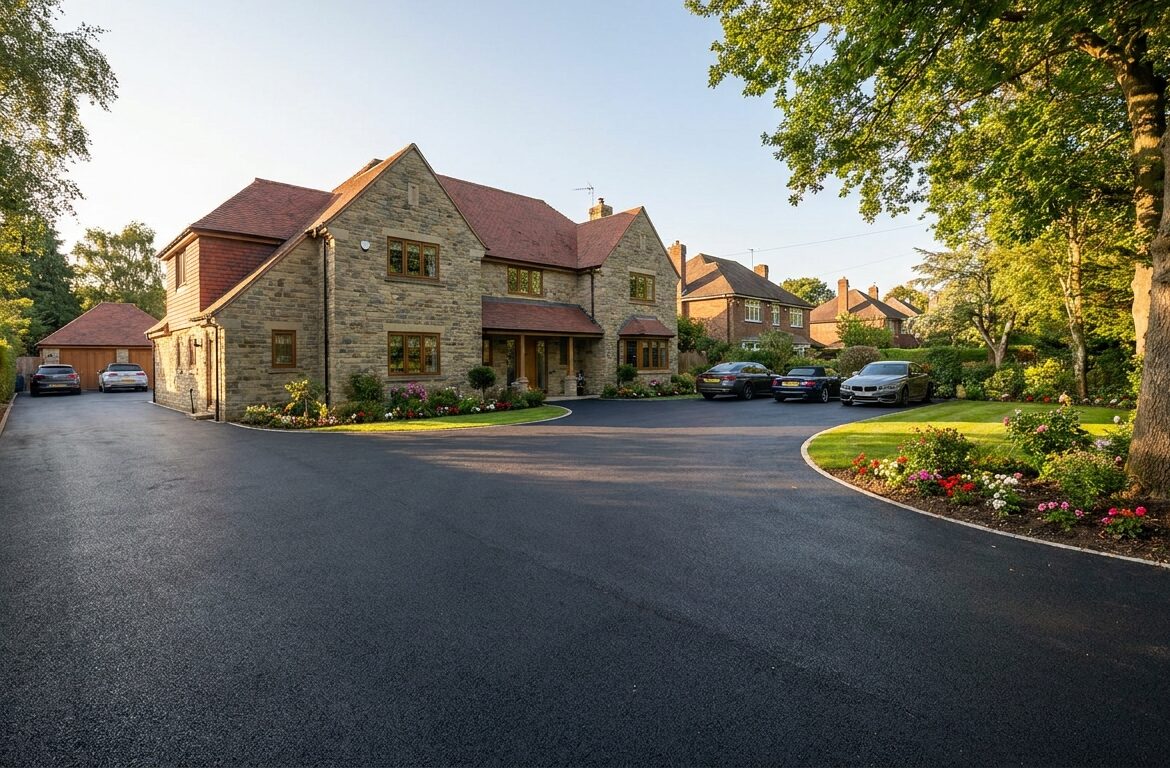
Tarmac is still the most-quoted surface for UK driveways, but Leicestershire homeowners comparing quotes in 2026 need to know where it wins, where it loses to resin-bound or block paving, and when planning rules rule it out entirely.
TL;DR
Tarmac driveways in Leicestershire cost less upfront and go down fast, but planning rules bite hard: any non-permeable driveway over 5 square metres needs council permission unless water drains onto a permeable area or garden. Standard tarmac is a Buy for tight budgets and quick turnarounds, typically lasting 15-20 years with resurfacing. Resin-bound surfacing is a Buy for anyone who wants permeability without the planning headache and a longer 15-25 year lifespan. Block paving is a Consider for kerb appeal but costs more to lay properly. If you're comparing tarmac against the alternatives, Cresta Driveways installs resin-bound and block paving across Rugby and the wider region and can talk you through which surface actually fits your driveway's drainage and access.
Why this matters
Leicestershire's clay-heavy ground moves more than sandy soil, and that matters for any bound surface sitting on top of it. A tarmac driveway laid on a thin sub-base will crack and rut within 3-5 years on clay; one laid properly on 100-150mm of compacted MOT Type 1 will hold for 15-20 years.
Planning is the other variable people miss. Since 2008, any new or replacement hard surface over 5 square metres at the front of a house in England needs planning permission unless it's permeable or drains to a permeable area. Standard dense tarmac doesn't qualify. That single rule changes which surface is actually the cheaper option once you factor in a planning application.
Who this is for
This guide is for homeowners in Leicestershire — Rugby, Lutterworth, Market Harborough, Hinckley and the surrounding villages — who are weighing tarmac against resin-bound or block paving before getting quotes in. If you want the cheapest per-square-metre price and don't mind resurfacing in 15-20 years, tarmac is worth shortlisting. If your driveway is over 5m² and you don't want a planning application, read the permeability section before you commit.
What to look for in tarmac driveways in Leicestershire
Sub-base depth
A tarmac driveway is only as good as what's underneath it. On Leicestershire's clay soils, anything under 100mm of compacted stone sub-base will crack within a few winters as the ground shifts with moisture. Ask any installer to confirm sub-base depth in writing before they start.
Planning and permeability
Check whether your existing or proposed driveway exceeds 5 square metres at the front of the property. If it does, standard tarmac needs planning permission unless the water is directed onto a lawn or border rather than the road. This single check can add weeks and cost to a project that otherwise looked simple.
Drainage falls
Tarmac needs a fall of at least 1:60 to shed water properly. Flat or poorly graded tarmac pools water, and standing water is what breaks tarmac down fastest through freeze-thaw cycling in a typical Midlands winter.
Installer accreditation
Look for installers who are members of a trade body or offer a written guarantee on workmanship, not just materials. Tarmac that fails in year 2 is almost always a labour problem, not a materials one.
Edging and containment
Tarmac needs a hard edge — kerb, block, or concrete haunching — to stop the surface creeping and breaking at the perimeter. A driveway without edging will show cracking at the edges first, usually within 2-3 years.
Long-term maintenance
Tarmac needs periodic sealing and pothole patching, typically every 5-8 years, to hit the 15-20 year lifespan. Factor that ongoing cost in against a resin-bound surface, which needs less intervention over the same period.
Top picks: driveway surfaces for Leicestershire homes
Standard dense tarmac — the budget pick
One spec that matters: needs a minimum 100mm compacted sub-base to survive Leicestershire clay. Typical lifespan is 15-20 years with a resurfacing top layer around year 10-12. Fast to lay, usually done in 1-2 days once prep is complete. Verdict: Buy if your driveway is under 5m² or you're happy to apply for planning permission, and budget is the deciding factor.
SuDS-compliant permeable tarmac — the planning-safe pick
One spec that matters: uses an open-graded surface course that lets water pass through to a permeable sub-base, avoiding the 5m² planning trigger. Costs more than standard tarmac and needs specialist laying to keep the voids open. Verdict: Consider if you like the tarmac look but want to skip a planning application.
Resin-bound surfacing — the low-maintenance upgrade
One spec that matters: fully permeable by design, so it clears the SuDS planning rule outright regardless of size. Lifespan runs 15-25 years with minimal resealing needed. This is the surface Cresta Driveways installs most often across Rugby, and it's the pick that avoids both the planning question and the recurring resurfacing tarmac needs. Verdict: Buy for anyone prioritising long-term appearance and fewer planning hurdles over the lowest possible day-one price.
Block paving — the kerb-appeal pick
One spec that matters: individual blocks can be lifted and reset if one area settles, which tarmac can't do. Lifespan is 20-25+ years with basic re-sanding of joints every few years. Costs more to lay than tarmac due to labour time. Verdict: Consider if resale value and appearance matter more than upfront cost.
Gravel — the wildcard
One spec that matters: fully permeable with almost no planning restriction, and the cheapest of all five options to lay initially. Needs regular raking and top-up stone, and doesn't suit sloped driveways well. Verdict: Consider only for flat, low-traffic driveways where low cost trumps low maintenance.
What to avoid
- Tarmac laid direct onto old broken concrete — it looks fine for a season, then telegraphs every crack in the base surface within a year on Leicestershire's shifting clay.
- "Cash job" resurfacing gangs offering a driveway in a day — a proper tarmac job needs excavation, sub-base compaction, and a curing period; skipping any of these is why cheap tarmac fails inside 3 years instead of lasting 15-20.
- Ignoring the 5m² planning rule because "nobody checks" — councils do act on driveway planning breaches, and retrofitting permeability after the fact costs more than doing it right the first time.
Verdict comparison table
| Surface | Typical lifespan | Planning risk (over 5m²) | Maintenance | Verdict |
|---|---|---|---|---|
| Standard tarmac | 15-20 years | High — needs permission | Reseal/patch every 5-8 years | Buy (budget-first) |
| Permeable tarmac | 15-20 years | Low — SuDS compliant | Moderate | Consider |
| Resin-bound | 15-25 years | Low — SuDS compliant | Low | Buy (long-term) |
| Block paving | 20-25+ years | High — needs permission | Low-moderate | Consider (kerb appeal) |
| Gravel | 10-15 years | Low — SuDS compliant | High (raking/top-up) | Consider (flat, low-traffic) |
FAQ
What's the best driveway surface for Leicestershire homes?
For most Leicestershire properties, resin-bound surfacing is the strongest all-round pick because it's permeable by design and avoids the 5m² planning trigger that catches standard tarmac. Tarmac still wins on lowest upfront cost if your driveway is small enough to sidestep planning.
Is tarmac cheaper than resin-bound driveways?
Standard tarmac is usually the cheaper surface to lay initially, but it needs resealing and patching roughly every 5-8 years to hit its 15-20 year lifespan. Resin-bound needs less ongoing maintenance over the same period.
Do I need planning permission for a tarmac driveway in Leicestershire?
You need planning permission for any new or replacement non-permeable driveway over 5 square metres at the front of a property, under rules that have applied across England since 2008. Permeable tarmac, resin-bound, or gravel can avoid this requirement.
How long does a tarmac driveway last?
A properly laid tarmac driveway on a 100mm-plus compacted sub-base typically lasts 15-20 years before it needs full resurfacing, with patch repairs likely around year 10-12.
Can tarmac be laid over an existing concrete driveway?
Tarmac can be laid over sound, intact concrete, but laying it over cracked or broken concrete usually means the cracks reappear in the tarmac surface within a year as the base moves underneath it.
Is block paving better than tarmac for resale value?
Block paving generally holds resale appeal better than tarmac because individual blocks can be lifted and reset rather than needing a full resurfacing, and it typically lasts 20-25 years or more.
What's the cheapest permeable driveway option?
Gravel is usually the cheapest fully permeable option to install, though it needs more regular maintenance — raking and topping up stone — than resin-bound or permeable tarmac.
How thick should a tarmac driveway be?
A domestic tarmac driveway typically needs a sub-base of 100-150mm plus a binder and surface course on top, adjusted upward on clay-heavy ground common across Leicestershire.
One last thing
The 5 square metre planning threshold catches more Leicestershire homeowners than any pricing comparison does — plenty of people get three tarmac quotes before realising their driveway needs a planning application that a permeable surface would have avoided entirely. Ask about permeability before you ask about price, and the rest of the decision gets a lot simpler.